Level Up as a Technical Program Manager
Are you curious about what it takes to excel as a Technical Program Manager (TPM)? Or maybe you’re already on the TPM journey and want to advance your career. The TPM role is a unique blend of technical skill, project leadership, and strategic thinking. In this guide, we’ll break down essential skills, top learning resources, and AI tools. We will also share real-world strategies to help you thrive in this career path.
What Makes a Successful TPM?
1. Technical Knowledge
For Technical Program Managers (TPMs), technical depth isn’t about being a full-time coder—it’s about building strong technical intuition. Great TPMs understand how systems interact, recognize potential risks early, and simplify complexity into clear, actionable insights.
The key takeaways focus on understanding complex systems holistically rather than in isolated parts. First, distinguishing between analytical thinking and systems thinking is important. It helps in seeing how components interact within a whole. This approach avoids examining them individually. Second, learning to model systems is crucial. Recognizing feedback loops provides insight into how changes in one part can ripple through the entire system. Third, appreciating system dynamics is essential. Understanding concepts like equilibrium and adaptation helps in better anticipating how systems evolve over time. It also aids in understanding how they respond to interventions.
Developing technical depth allows TPMs to earn engineering trust, balance trade-offs, and connect technical realities with business priorities. Instead of mastering every programming language, focus on systems thinking, architecture fundamentals, and asking the right questions.
Key takeaways include mastering the design of scalable and high-performance systems. It also involves understanding how to structure components and APIs for reliability and maintainability. Another key aspect is applying architectural patterns and best practices to solve complex engineering challenges. Additionally, gaining insight into system trade-offs is important. Understanding how to approach large-scale system design problems aids in making informed technical decisions. This is particularly crucial under constraints like load, latency, and fault tolerance.
Consider learning Python. It’s easy to pick up. It is widely used across industries. Python is powerful for everything from web development to data science and automation. You gain the ability to work confidently with Python by understanding the basics like variables, loops, functions, and data structures. Additionally, you learn how to apply these skills to solve real problems through scripts and projects. Along the way, you pick up good habits for writing clean and organized code. This makes programs easier to read. Your code becomes easier to keep up. It also becomes easier to build upon.
Kubernetes helps manage, scale, and automate containerized applications reliably. Learning it enables faster app deployment. You can more easily handle traffic spikes. It ensures high availability and helps you work effectively in modern cloud environments. It’s a key skill for cloud-focused roles.
By staying curious, TPMs can strengthen credibility. They achieve this by sharpening technical skills and learning to translate engineering detail into business impact. This approach helps improve decision-making. As a result, TPMs grow their influence in both technical and leadership conversations.
Top Learning Resources
- Udemy: Systems Thinking Made Simple
- Udemy: Software Architecture & Design of Modern Large Scale Systems
- Hands-On Skills
- Python (Python For Everybody)
- Kubernetes (Kubernetes for the Absolute Beginners)
2. Project Management Skills
TPMs keep complex projects on track. Master agile project methodologies, risk management, and time management to guarantee success.
To manage project timelines, use a Gantt chart—sample Gantt chart below—to map tasks, durations, and dependencies. Define tasks, set start and end dates. Assign resources and update progress regularly. These steps keep the team aligned and the project on track.
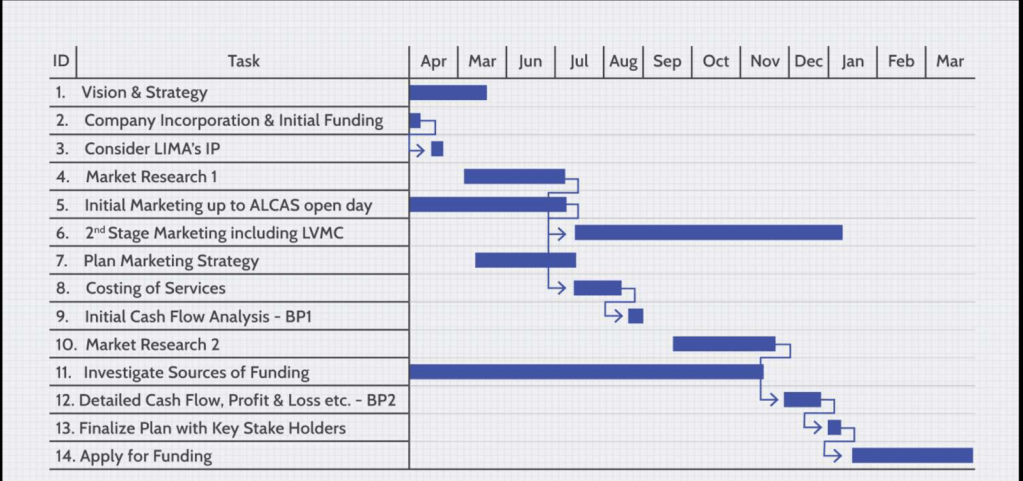
Sample Gantt Chart
To manage project risks effectively, take a structured approach. First, recognize potential risks. Next, analyze their probability and impact. Then, develop mitigation strategies. Apply these concepts to real-world scenarios. Keep a RAID (Risks Assumptions Issues Decisions) log. Document, track, and oversee risks throughout the project lifecycle. These measures help guarantee projects stay on track and achieve successful outcomes.
To boost productivity, recognize priorities. Use techniques like time blocking and the Pomodoro method. Build a personalized routine that aligns with your habits and energy levels. This helps reduce stress and improve efficiency.
Recommended Courses
- Udemy: Agile Project Management, Project Management: Gantt Charts in an Hour
- Udemy: Project Risk Management
- Udemy: Productivity and Time Management for the Overwhelmed
3. Stakeholder Management
Clear communication is key. Whether you’re running meetings, you need clear and consistent communication. When aligning teams on a shared vision, confirm clarity in communication. If you are updating executives, effective communication keeps everyone moving in the same direction.
In program management, stakeholder management is often the difference between success and failure. A recent case study from Indeed’s Data Platform Rationalization Project shows why.
The initiative aimed to retire on-prem infrastructure, migrate critical services to AWS, and reduce technical debt. By eliminating 52% of products in 24 months, the program helped realize annual savings of over $11 million.
What made the effort successful wasn’t just technical execution—it was stakeholder alignment. Building a detailed stakeholder map was crucial. Maintaining open communication helped significantly. Involving stakeholders in risk management kept leadership and teams aligned throughout the process.
The lesson is clear. Stakeholder management isn’t a side task. It’s the heartbeat of effective program management. This is especially true in large-scale cloud migration and rationalization initiatives.
4. Energy and Time Management
The best TPMs know that managing your time is really about managing your energy. Focus on high-impact tasks when your energy is at its peak, and keep organized to keep clarity and efficiency.
Maximizing Time Value means using time more effectively, since it’s irreplaceable. A digital-first approach can reduce administrative work and free up time for activities that boost clarity and well-being.
Strategies to Improve Time Value:
- Use Productivity Tools: Tools for email management, messaging, note-taking, and document collaboration help streamline communication and task handling
- Email Management: Organize emails into clear folders, unsubscribe from unnecessary newsletters, remove irrelevant messages, and rank important ones to keep focus
- Message Management: Rank essential chats, archive important conversations, and mute less critical notifications to reduce distractions
- Task Management: Using a central system for daily task prioritization and quick references ensures organized and efficient workflow
By keeping systems simple, organized, and digital, it’s possible to achieve a balanced and productive lifestyle while minimizing wasted time.
Growing Your TPM Career: The 3 E’s
Advancing as a Technical Program Manager requires more than just managing projects. It demands a balance of knowledge, practical skills, and strategic insight. The framework of the 3 E’s—Education, Experience, and Exposure—provides a clear roadmap. This roadmap helps in developing the capabilities needed to grow. It is essential to thrive in this role.
- Education – Continuous learning is the foundation of a strong TPM career. Stay curious by exploring new methodologies, frameworks, and tools. Pursue relevant certifications like PMP, Scrum, or Agile to confirm your knowledge. Keep up with industry trends, emerging technologies, and best practices. This will help you stay relevant and informed. It helps you foresee challenges and drive more effective project outcomes.
- Experience – Hands-on experience is where skills truly develop. Seek out opportunities to lead projects, volunteer for cross-functional initiatives, or take on responsibilities outside your current scope. These experiences help you tackle real-world challenges. They build confidence in decision-making. They help you develop practical problem-solving skills that are critical for a TPM. The more diverse your experiences, the better you understand organizational dynamics and how to deliver value.
- Exposure – Learning from others accelerates growth. Shadow senior TPMs or leaders to watch strategic thinking, stakeholder management, and high-level decision-making. Engage in mentorship, attend leadership forums, or join in cross-team discussions to gain insight into organizational priorities and long-term planning. Exposure helps you build a strategic mindset, develop influential communication skills, and understand how to navigate complex business environments effectively.
These three pillars—Education, Experience, and Exposure—work together to help you grow from managing tasks to leading initiatives with impact. This positions you as a trusted and strategic TPM within your organization.
How AI is Transforming the TPM Role
AI can boost your productivity by automating routine tasks, summarizing data, and surfacing insights. Treat AI as a teammate: use it for brainstorming, scenario planning, and reviewing work while applying your judgment. Make the most of AI features in AI Tools like Zoom, Slack, and Gemini.
Tip: Be specific with prompts for better AI outputs and stay aligned with your organizational AI guidelines.
Real-World Tips and Tools
Imagine you’ve got this super handy Google Sheet template that’s like your project’s command center. It’s a breeze to use and doesn’t need you to be a project management ninja or anything. Just copy the template, tweak it to fit your project’s vibe and you’re good to go!
You’ve got three tabs to play with:
- Project Plan & Health: This is where the magic happens. You’ll map out your project’s journey, breaking it down into phases and tasks. Who’s doing what? Just check the RACI column. Need to link to important docs or track a task’s progress? No issue. You can link to all sorts of stuff like your Project Charter or user analysis. Keep an eye on how things are moving with color-coded health indicators and progress percentages.
- RAID: Keep an eye on potential hiccups here. Anything that throws a wrench in your plans? Jot it down. If a risk becomes a real problem, add it to the portfolio level RAID log. This ensures everyone is in the loop.
- Stakeholder Register: Here’s a list of all the people involved in your project. It’s like your project’s social network, helping you set up groups and channels to keep everyone connected.
Navigating Career Transitions and Challenges
The tech world moves quickly, so it’s important to stay proactive in managing your career. Regularly check internal job openings to find roles or projects that match your interests and growth goals. Keep learning new skills. Use courses, certifications, or hands-on projects. Focus on work that creates real value for the business. Being flexible, adaptable, and resilient will help you navigate changes like layoffs, reorganizations, or shifting priorities. At the same time, keeping a customer-focused mindset ensures that your work is meaningful. It remains aligned with what truly matters to the organization.
The TPM of 2124
Looking ahead to 2124, the Technical Program Manager (TPM) role is expected to evolve dramatically. TPMs will blend systems strategy, AI orchestration, and human alignment. Future TPMs will not manage traditional projects and timelines. They will guide intelligent systems and guarantee ethical AI decision-making. Additionally, they will align human priorities with machine-driven execution. The role will shift from coordination to governance. TPMs will focus on trust-building. They will also shape impactful outcomes at scale. This evolution will redefine the future of program management.
Quick Takeaways for TPM Career Growth
- Build technical depth and project management mastery
- Leverage AI to focus on strategic, high-value work
- Gain exposure through shadowing and mentoring
- Stay adaptable and continuously upskill
A successful TPM career combines technical skill, strategic thinking, and hands-on experience. Use the right resources. Embrace AI productivity tools. Learn from real-world scenarios. You can navigate your TPM journey with confidence.
What aspect of the TPM journey are you most interested in exploring next?
FAQ
Q: What does a Technical Program Manager (TPM) do?
A: TPMs bridge technical and business teams, manage complex projects, mitigate risks, and drive cross-functional alignment.
Q: How do I become a TPM?
A: Gain technical knowledge, develop project management skills, build stakeholder communication, and accumulate hands-on experience. Certifications like PMP or Scrum can also help.
Q: Which tools should TPMs learn?
A: Project management software (Jira, Asana), collaboration tools (Slack, Zoom), and AI tools (Gemini) are highly recommended.
Like this article ? How about giving it a like and share ? Thank you!
 Digital Garage